Last October, Marcus Chen stared at his laptop screen in disbelief. His car’s transmission had just died—$2,800 to repair—and his checking account showed $412. The Denver-based graphic designer had a solid income, paid his bills on time, and even contributed to his 401(k). Yet here he was, about to put a major repair on a credit card at 24.99% APR.
Six months later, Marcus has $4,200 sitting in separate savings buckets earmarked for car repairs, his annual insurance premium, and holiday gifts. He hasn’t touched his emergency fund once. For deeper context, see this analysis of 50/30/20 Budget Rule Explained: The Simple Framework That Tr.
The difference? Three simple sinking funds.
The situation: Despite earning $68,000 annually and maintaining a budget, Marcus repeatedly found himself blindsided by predictable expenses—car maintenance, insurance renewals, even Christmas gifts he knew were coming every December. Each “surprise” pushed him toward credit card debt or forced him to raid his emergency savings for non-emergencies.
Marcus’s story isn’t unusual. It’s actually the norm. And the solution he discovered has been hiding in plain sight for decades; it’s just rarely taught in personal finance basics.
In this guide, you’ll learn exactly what sinking funds are, why they’re different from your emergency fund, and how to set up your own system—even if you’re starting with just $50 a month. We’ll walk through real numbers, show you which categories matter most, and give you a framework you can implement this week.
What Exactly Is a Sinking Fund? The Concept Banks Don’t Teach You
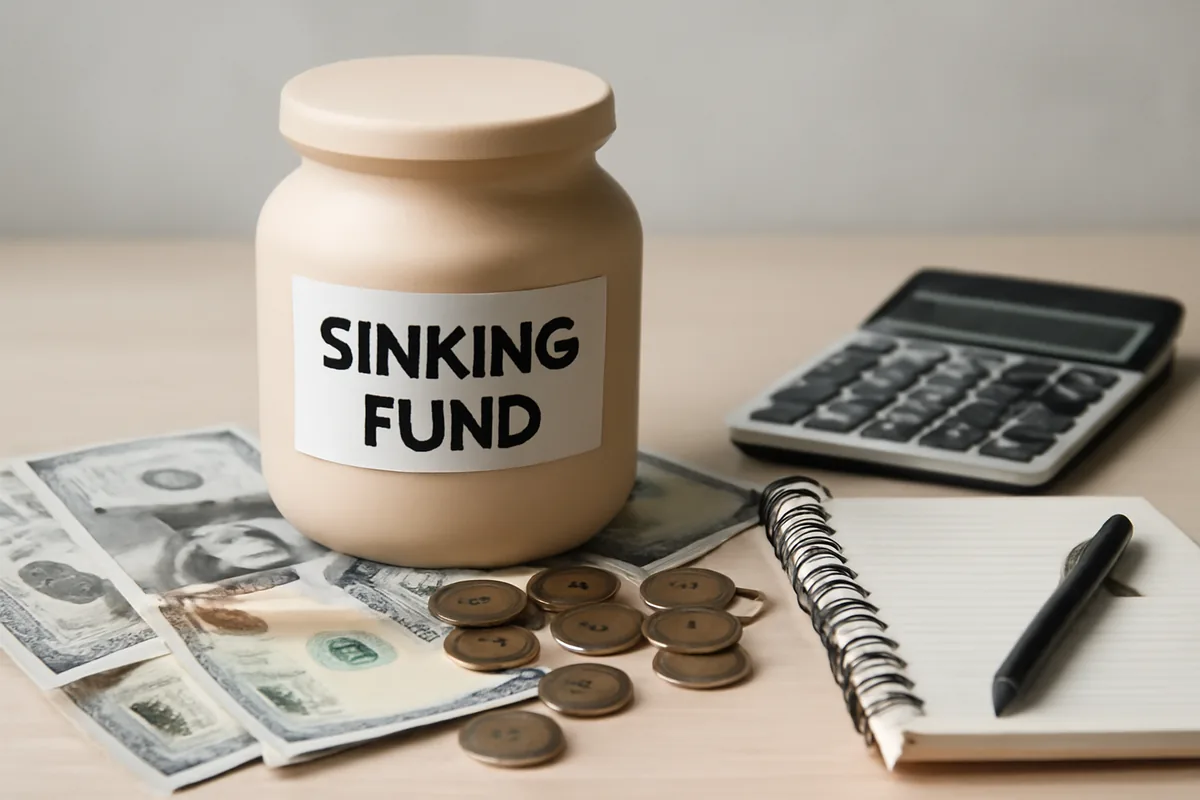
A sinking fund is money you set aside gradually for a specific, planned expense. That’s it. No complex formulas, no investment strategies—just intentional saving for something you know is coming.
The term actually comes from corporate finance. Companies have used sinking funds since the 18th century to pay off bonds and large debts systematically. According to Investopedia’s financial glossary, the concept dates back to British government debt management in the 1700s.
But you don’t need to be a corporation to benefit.
Here’s the core idea: instead of scrambling when your $1,200 car insurance bill arrives in July, you save $100 monthly starting in August of the previous year. When July hits, the money’s already there. No stress. No debt. No “emergency.”
The psychology matters as much as the math. When you label money for a specific purpose, you’re less likely to spend it on something else. A 2024 study from the National Bureau of Economic Research found that mental accounting—assigning dollars to specific jobs—increased savings rates by 31% compared to general savings goals.
Sinking Funds vs. Emergency Funds: The Critical Difference
This is where most beginners get confused. They lump everything into one savings account and call it “emergency money.” Then they drain it for car repairs, holiday shopping, and annual subscriptions—none of which are actual emergencies.
Let’s be clear:
- Emergency fund: Unexpected job loss, medical crisis, urgent home repairs you couldn’t predict
- Sinking fund: Expenses you know are coming—car maintenance, insurance premiums, vacations, gifts, property taxes
Your car needing maintenance isn’t an emergency; it’s inevitable. Christmas arriving in December isn’t a surprise; it happens annually. Yet according to a 2025-2026 Bankrate survey, 56% of Americans couldn’t cover a $1,000 unexpected expense with savings.
The irony? Most of those “unexpected” expenses were entirely predictable.
Marcus realized this after tracking his spending for three months. His “emergencies” followed patterns: car repairs hit every 8-10 months, insurance came due twice yearly, and holiday spending spiked every November and December. None of it was random.
So he stopped treating predictable expenses like surprises. That single mindset shift changed everything.
Phase One: The Wake-Up Call
Sarah Thompson, a 34-year-old marketing coordinator from Columbus, Ohio, remembers the exact moment her financial life shifted. It was January 2025, and her transmission failed on a Tuesday morning commute. The repair bill: $2,847. Her savings account: $312.
This scenario plays out across American households with alarming regularity. According to Federal Reserve data, approximately 37% of U.S. adults would struggle to cover an unexpected $400 expense without borrowing money or selling possessions. Thompson joined a statistic she never anticipated becoming.
The decision: After putting the repair on a credit card with a 24.99% APR, Thompson spent three weeks researching alternatives. She discovered sinking funds through a personal finance podcast and decided to implement them immediately—not as a vague someday goal, but as a structured monthly commitment. (Related: our guide on How to Stop Living Paycheck to Paycheck: A Step-by-Step Guid.)
The result: By December 2025, Thompson had accumulated $1,800 across three dedicated sinking funds: car repairs ($75/month), home maintenance ($50/month), and medical expenses ($25/month). When her water heater needed replacement in early 2026, she paid the $1,100 bill without touching her emergency fund or reaching for plastic.
Phase Two: Building the Framework
The transition from traditional savings to sinking funds requires more than enthusiasm—it demands architecture. Marcus Chen, a financial coach based in Austin, Texas, has guided over 400 clients through this exact transformation since 2024. His observation: most people fail not from lack of discipline, but from lack of specificity.
Traditional savings accounts pool everything together. Your vacation money sits next to your property tax fund, which mingles with your holiday gift budget. This creates what behavioral economists call “mental accounting failure”—when boundaries blur, spending decisions become arbitrary.
The decision: Chen recommends clients establish between four and eight distinct sinking fund categories, each with its own tracking mechanism. Whether using separate bank accounts, spreadsheet tabs, or budgeting apps like YNAB or Goodbudget, the key lies in visibility. Each dollar must have a designated purpose before it arrives.
The result: Chen’s clients who implemented structured sinking funds reported 62% fewer “financial emergencies” within their first year. The emergencies didn’t disappear—cars still broke down, appliances still failed—but they stopped feeling like emergencies. They became anticipated expenses with predetermined funding.
Phase Three: The Compound Effect
Six months into her sinking fund journey, Thompson noticed something unexpected. Her stress levels around money had fundamentally shifted. The constant low-grade anxiety about “what if” scenarios had quieted. She wasn’t just saving differently; she was thinking differently.
This psychological transformation represents perhaps the most undervalued benefit of sinking funds. Traditional emergency funds, while essential, operate on fear—hoarding against unknown catastrophe. Sinking funds operate on anticipation—preparing for the predictable rhythms of life.
The decision: Thompson expanded her system in mid-2025, adding categories for annual insurance premiums ($120/month), professional development ($40/month), and a dedicated “future furniture” fund ($60/month) for replacing aging household items.
The result: By February 2026, Thompson had accumulated $4,200 across seven sinking funds. More importantly, she had eliminated $3,400 in credit card debt that previously accumulated from predictable expenses she had failed to predict. Her credit score increased 47 points, from 671 to 718, primarily from reduced credit utilization.
Phase Four: Refinement and Automation
The final phase involves removing friction entirely. What begins as manual transfers and constant monitoring eventually becomes automated infrastructure—money flowing into designated categories without conscious intervention.
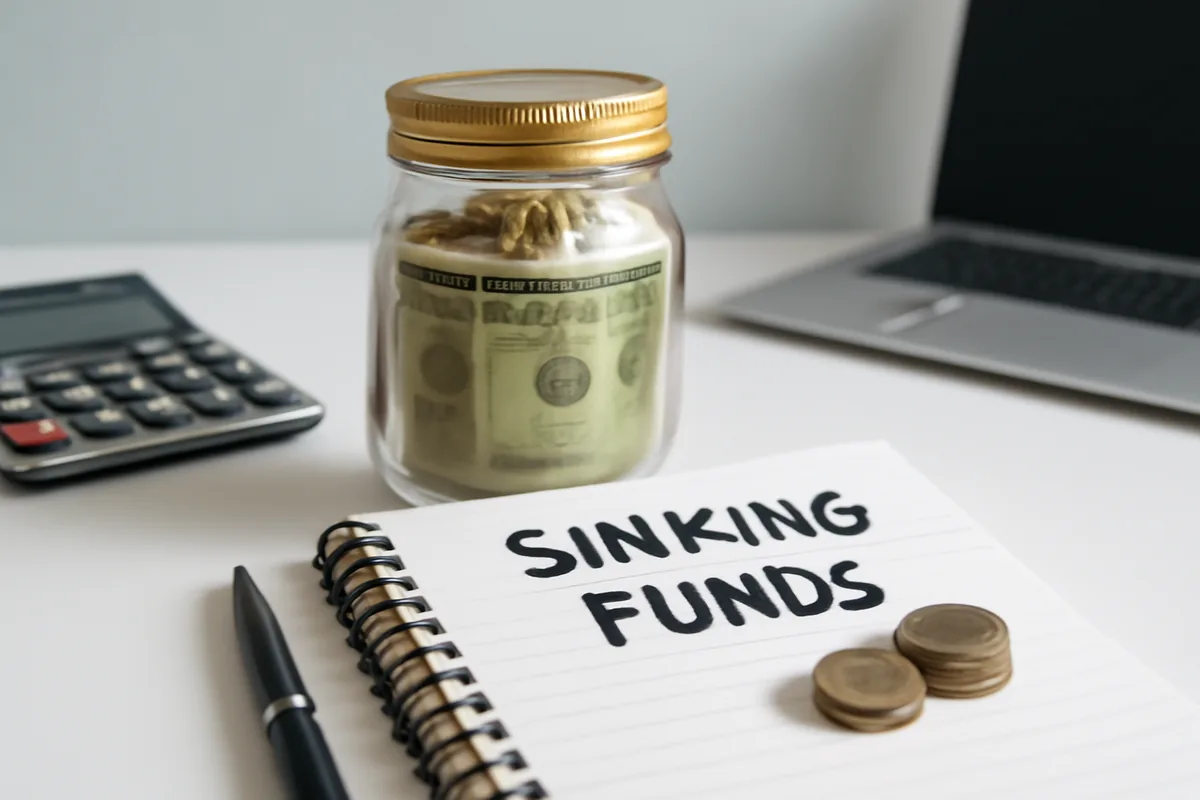
Modern banking tools have simplified this process considerably. Many institutions now offer unlimited sub-accounts or “buckets” within savings accounts. Ally Bank, Capital One 360, and SoFi all provide these features at no additional cost, allowing users to create labeled partitions for each sinking fund category.
The decision: Thompson consolidated her sinking funds into a single high-yield savings account with seven labeled buckets, automating transfers to occur two days after each paycheck.
The result: Manual money management time dropped from approximately 45 minutes weekly to under 10 minutes monthly—a simple review to ensure automation functioned correctly. The system, once built, essentially ran itself.
A Practical Example: Buying a Laptop Without Debt
Let’s consider another practical example. Sarah, a graphic designer, wanted to buy a new, high-end laptop for work in early 2026. The estimated cost was $3,000. Instead of waiting and putting it on a credit card, she started a sinking fund in January 2025. By dividing the cost by the 12 months she had to save, she arrived at her target: $250 per month.
She opened a dedicated high-yield savings account and automated the $250 transfer for the first of every month. For a year, the money grew quietly in the background. In February 2026, when her old laptop finally failed, she walked into the store, paid the $3,000 in full from her sinking fund, and walked out with her new machine. No new debt, no interest payments, and zero financial stress. She simply executed a plan she had put in motion a year earlier.
Key Lessons From Using Sinking Funds
Adopting a sinking fund strategy reveals several powerful financial insights that go beyond simple saving.
- Consistency Beats Intensity: The most significant lesson is that small, regular contributions are far more effective than trying to find a large lump sum at the last minute. Sarah’s $250 monthly contribution was manageable within her budget, whereas a sudden $3,000 expense would have been a major financial shock.
- Automation is a Superpower: By automating her transfers, Sarah removed willpower from the equation. The money was saved before she had a chance to spend it. This “pay yourself first” method is the cornerstone of successful saving, ensuring your goals are prioritized.
- Naming Your Goals Creates Commitment: Labeling her account “New Laptop Fund” created a specific psychological barrier. It wasn’t just a pot of money; it was money with a job. This makes it much harder to justify raiding the fund for an unrelated impulse purchase, keeping you honest and focused on the goal.
How to Apply This to Your Situation
Implementing sinking funds is a straightforward process you can start today.
- Identify and List: Brainstorm all your predictable, non-monthly expenses for the next one to three years. Think bigger than just vacations. Include things like annual insurance premiums, car registration, holiday gifts, new tires, or replacing an appliance.
- Estimate and Calculate: Assign a realistic cost and a target date to each item. Divide the total cost by the number of months you have until the deadline. This is your monthly savings amount for that specific goal. For example: $600 for new tires needed in 12 months = $50 per month.
- Select Your Tool: A high-yield savings account (HYSA) is the best vehicle. As of early 2026, banks like Ally Bank and Marcus by Goldman Sachs offer APYs in the 4.50% to 5.25% range. Crucially, many now offer features to digitally separate your money. SoFi’s “Vaults” and Ally’s “Buckets” let you create multiple named sub-accounts within a single HYSA, making it easy to track progress for each goal.
- Automate Everything: Set up recurring transfers from your primary checking account to your HYSA for the calculated monthly amounts. This is the most critical step. Once it’s set up, you only need to monitor it occasionally.
Conclusion
Sinking funds are a proactive financial strategy, not a restrictive one. They transform anxiety about large, future expenses into a manageable, automated plan. By breaking down big costs into small, consistent savings acts, you build a system that grants you financial peace of mind. It’s a simple but powerful tool that allows you to spend on your goals without incurring debt or guilt.