The $400 Car Repair That Changed Everything
Last month, my neighbor Sarah’s transmission failed. The repair bill? $2,300. She had $127 in savings.
Sarah makes $65,000 a year. She’s not irresponsible—she just never built a financial buffer. So she charged the repair to a credit card at 24.99% APR. That $2,300 fix will cost her over $3,100 by the time she pays it off. We covered How to Financially Prepare for a Recession: Step-by-Step Gui in detail elsewhere.
This scenario plays out millions of times yearly. According to Federal Reserve data from 2025-2026, 37% of Americans can’t cover an unexpected $400 expense with cash. Not $2,300. Four hundred dollars.
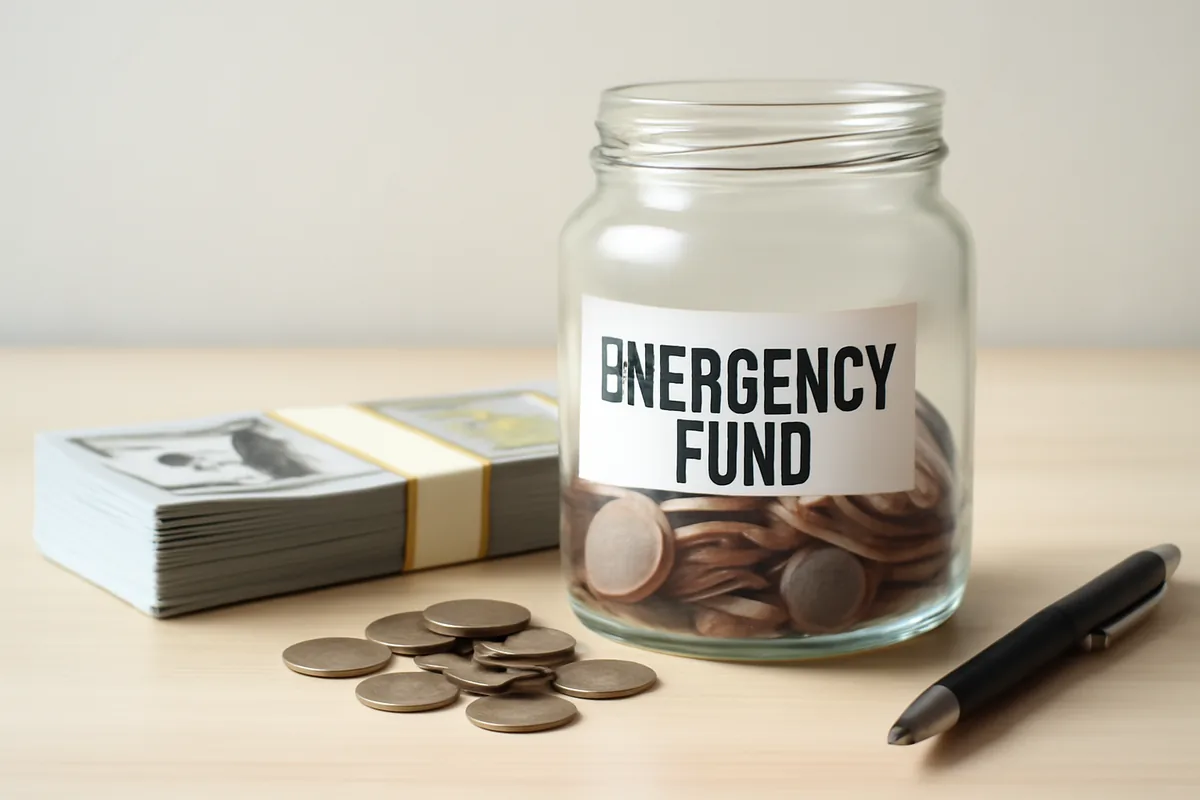
An emergency fund prevents this spiral. It’s the difference between a temporary inconvenience and months of financial stress. And building one is simpler than most guides make it seem.
After this guide, you’ll be able to:
- Calculate your personal emergency fund target based on your actual expenses
- Set up an automated savings system that works without willpower
- Choose the right account type to maximize interest while keeping funds accessible
Time required: 45 minutes to set up; 3-9 months to fully fund
Skill level: Beginner
Prerequisites: What You Need Before Starting
Building an emergency fund doesn’t require special tools or financial expertise. But you do need a few basics in place first.
Essential Requirements
- A checking account — Any standard bank account where your income lands
- Online banking access — You’ll set up automatic transfers; mobile apps make this easier
- 30 days of expense records — Bank statements, credit card bills, or a budgeting app history
- 15-20 minutes weekly — For monitoring progress initially
Helpful But Not Required
- A separate savings account (we’ll discuss opening one in Step 2)
- Direct deposit through your employer
- A budgeting app like YNAB, Mint, or Monarch Money
Don’t have 30 days of expense records? Start tracking now. Use your bank’s transaction history or download a free app. You can begin Step 1 while gathering this data.
Step 1: Calculate Your Actual Emergency Fund Target
The generic advice says “save 3-6 months of expenses.” But that range is enormous. Someone spending $4,000 monthly faces a target between $12,000 and $24,000. That $12,000 difference matters.
Your specific number depends on your circumstances—not arbitrary rules.
Determine Your Monthly Essential Expenses
Essential expenses keep you housed, fed, and employed. They’re non-negotiable even during a financial crisis.
Pull up your last three months of bank and credit card statements. Categorize spending into essentials only:
| Category | Examples | Your Monthly Average |
|---|---|---|
| Housing | Rent/mortgage, property tax, HOA fees | $_____ |
| Utilities | Electric, gas, water, internet, phone | $_____ |
| Food | Groceries only (not restaurants) | $_____ |
| Transportation | Car payment, insurance, gas, transit pass | $_____ |
| Insurance | Health, life, disability premiums | $_____ |
| Minimum debt payments | Credit cards, student loans, personal loans | $_____ |
| Childcare | Daycare, after-school care | $_____ |
Notice what’s missing: streaming subscriptions, gym memberships, dining out, clothing. In a true emergency, these get cut immediately.
Troubleshooting: If your essential expenses seem impossibly high, you may have miscategorized wants as needs. That $180 gym membership? Technically non-essential. The $65 streaming bundle? Same. Be ruthless in this assessment. The point isn’t to eliminate these expenses permanently—it’s to understand what bare-minimum survival actually costs.
Choose Your Multiplier: 3, 6, or 9 Months
Not everyone needs the same cushion. The Consumer Financial Protection Bureau recommends adjusting based on job stability and household structure.
3 months works if:
- You have a stable government or union job
- Your household has two incomes
- Your industry has low unemployment
- You have other safety nets (family support, home equity)
6 months makes sense if:
- You’re a single-income household
- Your industry has moderate volatility
- You have dependents
- Your skills are specialized but transferable
9+ months is wise if: For deeper context, see our guide on How to Invest in Your 20s: A Step-by-Step Beginner’s G.
- You’re self-employed or commission-based
- You work in a volatile industry (tech startups, oil and gas, entertainment)
- You have health conditions requiring continuous coverage
- Your job search would likely take longer than average
So if your essential monthly expenses total $3,200 and you’re a single-income household with one child, your target is $19,200 (6 months × $3,200).
Write this number down. It’s your finish line.
Step 2: Choose the Right Account Type for Your Emergency Fund
Where you store emergency savings matters almost as much as how much you save. The wrong account can cost you hundreds in lost interest annually or, worse, make your money too accessible during moments of weakness.
How to do it:
- Open a high-yield savings account (HYSA) at an online bank separate from your primary checking account. As of early 2026, top HYSAs offer between 4.25% and 4.75% APY—compared to the national average of 0.45% at traditional banks. Consider options like Marcus by Goldman Sachs, Ally Bank, or Capital One 360 Performance Savings.
- Ensure the account has no monthly maintenance fees, no minimum balance requirements, and FDIC insurance up to $250,000. Verify that transfers to your primary bank take 1-2 business days—fast enough for real emergencies, slow enough to prevent impulsive spending.
| Account Type | Typical APY (2026) | Accessibility | Best For |
|---|---|---|---|
| Traditional Savings | 0.40%-0.55% | Instant | Not recommended |
| High-Yield Savings | 4.25%-4.75% | 1-2 days | Primary emergency fund |
| Money Market Account | 4.00%-4.50% | Same day | Larger balances ($10K+) |
| CDs (12-month) | 4.50%-5.00% | Penalty for early withdrawal | Portion of fund only |
Expected result: A dedicated, interest-bearing account that keeps your emergency fund separate from everyday spending while still generating meaningful returns.
Troubleshooting: If you find yourself dipping into the fund for non-emergencies, choose a bank that doesn’t offer a debit card or ATM access for the savings account. The additional friction of initiating a transfer creates a psychological barrier against impulse withdrawals.
Step 3: Automate Your Savings with a Realistic Monthly Target
Willpower fails. Systems succeed. The most reliable emergency funds are built through automation—removing the monthly decision of whether to save from your already overtaxed brain.
How to do it:
- Set up an automatic transfer from your checking account to your emergency fund HYSA, timed for the day after your paycheck arrives. This “pay yourself first” strategy treats savings as a non-negotiable bill. Start with an amount that feels slightly uncomfortable but sustainable—typically 10-15% of your take-home pay. If that feels impossible, begin with 5% and increase by 1% each month.
- Create a separate small automatic transfer ($25-50) that triggers mid-month. This second transfer catches any surplus from the first half of your pay period and accelerates your progress without dramatically impacting your cash flow.
Expected result: Within 12-18 months of consistent automation, most households earning the median US income ($74,580 as of 2025-2026) can accumulate $5,000-8,000 in emergency savings—enough for a solid two to three months of essential expenses.
Troubleshooting: If automated transfers cause overdrafts, your savings target is too aggressive. Reduce the amount by 25% and reassess after two months of consistent saving. Building the habit matters more than hitting an arbitrary number quickly.
Step 4: Identify Acceleration Opportunities Without Lifestyle Sacrifice
Slow, steady contributions build the foundation—but strategic windfalls can compress years of saving into months. The key is capturing money that was never part of your regular spending pattern.
How to do it:
- Redirect 100% of irregular income directly to your emergency fund: tax refunds (average US refund in 2025-2026: approximately $2,850-3,100), work bonuses, cash gifts, rebates, and credit card rewards. Because this money never entered your monthly budget, you won’t miss it.
- Conduct a quarterly subscription audit using tools like Rocket Money ($3-12/month) or manually reviewing recurring charges. The average American household spends $200-300 monthly on subscriptions, with $50-80 going toward services they’ve forgotten or rarely use. Cancel aggressively, then redirect those savings.
Expected result: By capturing 2-4 windfalls per year and trimming $50-100 in forgotten subscriptions monthly, you can accelerate your emergency fund timeline by 30-40% without changing your day-to-day lifestyle.
Troubleshooting: If windfalls keep getting spent before they reach savings, set up a dedicated checking account as a holding pen. When irregular income arrives, transfer it there immediately, then move it to your HYSA within 48 hours. This two-step process prevents the money from blending into your regular spending pool.
Common Mistakes to Avoid
Building an emergency fund is straightforward, but several common missteps can undermine your financial security. Avoiding these pitfalls is as important as saving the money itself.
- Mistake: Investing the fund for higher returns.
Fix: Prioritize safety and liquidity over growth. Your emergency fund is insurance, not an investment. Keep it in a high-yield savings account (HYSA) or money market account where the principal is protected and accessible within 1-3 business days. Market downturns, like the volatility seen in 2024, demonstrate why you cannot risk this money in stocks or crypto. - Mistake: Using a regular, low-yield savings account.
Fix: Maximize your earnings without adding risk. Standard savings accounts at brick-and-mortar banks often pay less than 0.5% APY. As of early 2026, many online HYSAs offer rates between 4.0% and 5.25%. This difference can amount to hundreds of dollars per year in interest, helping your fund keep pace with inflation. - Mistake: Co-mingling funds with your checking account.
Fix: Maintain a separate, dedicated account for your emergency savings. This creates a psychological barrier, making you less likely to dip into it for non-emergencies. It also simplifies tracking your progress toward your goal. - Mistake: Setting it and forgetting it forever.
Fix: Re-evaluate your emergency fund target annually or after major life events like a promotion, a new child, or a significant increase in housing costs. Your expenses change over time, and your safety net must adapt accordingly. - Mistake: Defining “emergency” too broadly.
Fix: Create a clear definition. An emergency is an unexpected, necessary expense that could derail your finances (e.g., job loss, major medical bill, urgent home repair). A holiday sale, vacation, or concert tickets are not emergencies.
Next Steps: Beyond the Emergency Fund
Once your emergency fund is fully funded, you can redirect your savings power toward other financial goals. With your safety net in place, you can afford to take on more calculated risks to build long-term wealth.
Consider these priorities:
- Aggressively Pay Down High-Interest Debt: Target credit card balances or personal loans with interest rates above 8-10%. The guaranteed return from eliminating this debt is often higher than you can safely earn by investing.
- Increase Retirement Contributions: If you aren’t already, contribute enough to your 401(k) to get the full employer match. Then, aim to max out contributions to a Roth or Traditional IRA.
- Save for Mid-Term Goals: Begin saving for goals 3-10 years away, such as a down payment on a house, in a combination of HYSAs and low-risk investment accounts.
Conclusion
Building an emergency fund is the foundational step toward genuine financial security. It creates a buffer between you and life’s inevitable surprises, providing not just money but also peace of mind. By automating your savings, avoiding common mistakes, and keeping the fund liquid and accessible, you’re creating a stable base from which you can confidently pursue all your other financial ambitions. Your future self will thank you for the security you’re building today.