If you’re staring at a pile of credit card statements and loan balances, feeling completely lost about where to start—take a breath. You’re not alone, and you don’t need a finance degree to figure this out. Two straightforward strategies have helped millions of Americans tackle their debt: the snowball method and the avalanche method. Both work. The right choice depends on what keeps you moving forward.
In simple terms: The debt snowball pays off your smallest balances first for quick wins; the debt avalanche targets your highest interest rates first to save money overall. (Related: our guide on How to Pay Off Credit Card Debt Fast: A Step-by-Step System .)
Why does picking between these two matter? Because debt repayment isn’t just math—it’s behavior. According to NerdWallet’s 2025-2026 household debt analysis, the average American carries around $7,000-$8,000 in credit card debt alone. That weight affects everything: your sleep, your relationships, your ability to plan for the future. Understanding which repayment approach fits your personality can mean the difference between finally becoming debt-free and giving up six months in.
Understanding the Debt Snowball Method
The debt snowball method is beautifully simple. You line up all your debts from smallest balance to largest—ignoring interest rates entirely—and attack the smallest one first with every extra dollar you have. Meanwhile, you keep making minimum payments on everything else.
Once that smallest debt hits zero? That payment amount rolls into your next smallest debt. Then the next. Like a snowball rolling downhill, your payment power grows larger with each debt you eliminate.
Why Small Wins Create Big Momentum
Here’s what makes this method click for so many people: human brains love wins.
A Harvard Business Review study found that small, frequent victories boost motivation far more than distant, larger goals. When you wipe out a $300 medical bill in month one, your brain releases dopamine. You feel progress. You believe the plan is working.
This psychological boost matters more than most people realize. Debt repayment often takes years; without tangible milestones, it’s easy to abandon ship.
Who Should Consider the Snowball?
The snowball method works particularly well if you:
- Have multiple small debts that feel overwhelming
- Need visible progress to stay motivated
- Have struggled with sticking to financial plans before
- Carry debts with relatively similar interest rates
The trade-off? You might pay more in total interest compared to the avalanche method. But a plan you actually follow beats a “perfect” plan you abandon.
Exploring the Debt Avalanche Method
The debt avalanche flips the script. Instead of targeting the smallest balance, you rank your debts by interest rate—highest to lowest. Your extra payments hammer the highest-rate debt first while minimums cover everything else.
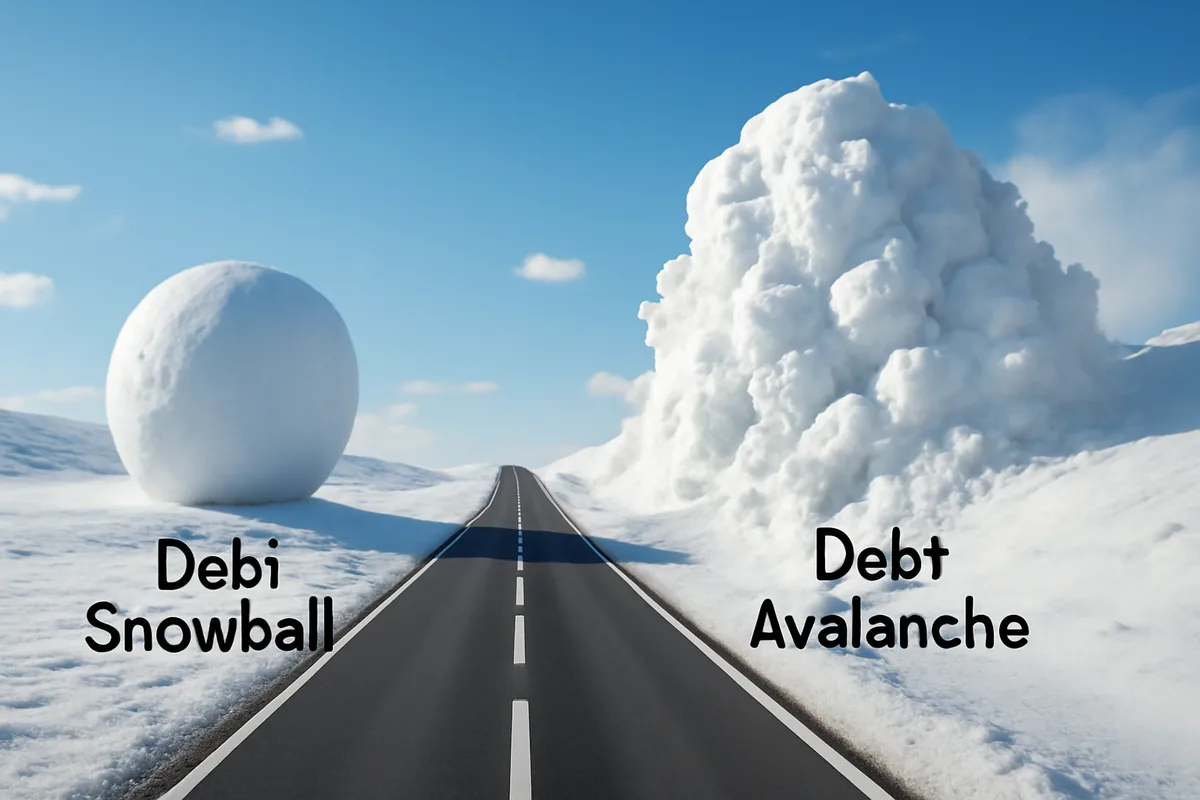
Mathematically, this approach is optimal. You’re eliminating the most expensive debt first, which means less interest accumulates across your entire debt load over time.
The Numbers Don’t Lie
Consider this scenario: You have a $2,000 credit card at 24% APR and a $500 store card at 15% APR.
With the snowball, you’d pay off the $500 card first—quick win. But that 24% card keeps bleeding money while you celebrate.
With the avalanche, you’d attack the 24% card immediately. The $500 balance grows slower at 15%, so your total interest paid drops significantly. For someone with $15,000+ in mixed debts, this difference can reach hundreds—sometimes thousands—of dollars.
The Discipline Factor
High-interest debts are often high-balance debts too. That means you might go 8, 12, even 18 months before crossing off your first debt. No dopamine hit. No visible line items disappearing. Just steady payments toward a number that seems to barely move.
This requires iron discipline—and honest self-assessment. If you’ve never stuck with a budget longer than three months, the avalanche’s delayed gratification might backfire. We covered Index Funds vs ETFs for Beginners: Avoid These Costly Mistak in detail elsewhere.
Who Thrives With the Avalanche?
This method suits you if:
- You’re motivated by long-term savings over quick wins
- Your highest-interest debt is also your largest balance
- You have strong financial discipline already
- Spreadsheets and optimization excite rather than exhaust you
Neither method is wrong. The avalanche saves money; the snowball saves motivation. In 2026, with average credit card APRs hovering around 20-22%, that interest savings can be substantial—but only if you cross the finish line.
Comparing the Financial Impact: What the Numbers Actually Reveal
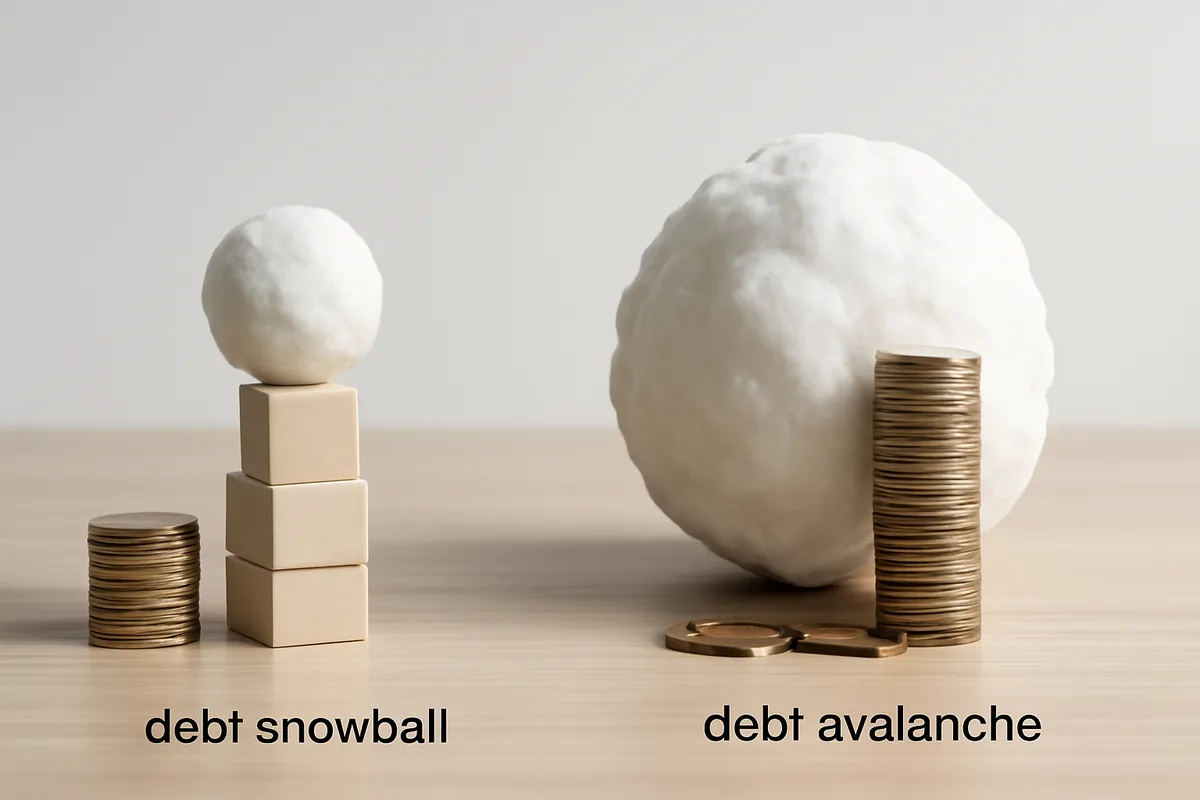
Think of debt repayment like emptying a bathtub with multiple drains, each leaking at different rates. The avalanche method plugs the biggest leak first—the highest interest rate—which stops the most water from escaping overall. The snowball method, by contrast, focuses on closing the smallest drain first, giving you a visible win even if more water continues to seep out elsewhere. Both eventually empty the tub, but the path and the total water lost differ significantly.
Why Avalanche Typically Saves More Money
When you target debts with the highest interest rates first, you’re attacking the most expensive money you’ve borrowed. A credit card charging 24% APR costs you more each month than a personal loan at 9%—regardless of the balance sizes. By eliminating that high-rate debt early, you reduce the total interest that accumulates over your repayment journey. For someone carrying $30,000 across multiple accounts, the difference between methods can range from $800 to $3,500 in interest savings, depending on the rate spread and repayment timeline.
Example: Imagine you have three debts: a $2,000 store card at 26% APR, a $7,500 credit card at 19% APR, and a $5,000 personal loan at 11% APR. The avalanche approach tackles that store card first—not because it’s smallest, but because 26% is bleeding you dry. Over 24 months of aggressive repayment, this ordering typically saves $400-600 compared to paying off the personal loan first simply because it feels more manageable.
Watch out: Interest savings look impressive on spreadsheets but mean nothing if you abandon the plan three months in.
The Psychological Currency of Quick Wins
Human motivation doesn’t run on compound interest calculations. The snowball method recognizes something important: crossing a debt off your list entirely creates momentum that spreadsheets can’t capture. Behavioral research consistently shows that people who experience early progress stick with difficult goals longer. Eliminating a $500 medical bill in six weeks feels tangible; watching a $15,000 balance drop to $14,200 over the same period can feel like running in place.
Example: Consider two people with identical debt loads. One follows avalanche perfectly and saves $1,200 in interest but quits after eight months of slow visible progress. The other uses snowball, pays $1,200 more in interest over the full term, but actually completes the journey because those early wins kept them engaged. The “suboptimal” method delivered the better real-world outcome.
Watch out: Don’t confuse emotional satisfaction with financial efficiency—acknowledge you’re making a trade-off, not discovering a loophole.
When Your Specific Situation Changes the Calculus
Neither method exists in a vacuum. Your cash flow, rate differentials, and balance distribution all influence which approach makes sense. If your highest-rate debt also happens to be your smallest balance, you’ve hit the sweet spot—both methods align perfectly. But if your largest debt carries the highest rate, avalanche demands patience that snowball doesn’t require.
| Factor | Favors Avalanche | Favors Snowball |
|---|---|---|
| Interest rate spread | Wide gap (10%+ difference) | Narrow gap (under 5% difference) |
| Smallest balance location | Also carries high rate | Carries low rate but quick to eliminate |
| Personal discipline | Strong, data-motivated | Needs visible progress for momentum |
| Monthly cash flow | Stable and predictable | Variable or tight |
Example: A freelancer with inconsistent income might benefit from snowball’s quick wins during lean months, while a salaried employee with steady paychecks can more easily sustain the avalanche’s longer payoff timelines without losing motivation.
Watch out: Avoid analysis paralysis—picking either method and starting immediately beats spending months optimizing a plan you never execute.
Pros and Cons of Each Method
Choosing between the debt snowball and debt avalanche methods requires understanding exactly what you gain and sacrifice with each approach. Both strategies work—Americans paid down approximately $67 billion in credit card debt between Q1 2024 and Q1 2025, according to Federal Reserve data—but the right choice depends on your financial situation and psychological makeup.
Debt Snowball: Advantages
- Immediate satisfaction: Eliminating your first debt within weeks or months creates tangible progress. A 2023 study published in the Journal of Consumer Research found that people who experienced early wins were 14% more likely to complete their debt payoff journey.
- Easy progress tracking: Counting paid-off accounts (1 down, 4 to go) feels more concrete than calculating interest saved.
- Increased motivation: Each eliminated balance frees up cash flow and builds confidence for tackling larger debts.
Debt Snowball: Disadvantages
- Higher total interest costs: Ignoring interest rates can cost you hundreds or thousands extra. For example, paying minimums on a $10,000 credit card at 24.99% APR while focusing on a $500 medical bill at 0% means that high-rate balance keeps growing.
- Longer payoff timeline for expensive debts: High-interest balances compound while you focus elsewhere, potentially adding months to your total payoff period.
Debt Avalanche: Advantages
- Lower overall interest costs: Attacking highest-rate debts first minimizes what you pay lenders. On $30,000 of mixed debt, the avalanche method typically saves $1,000-$3,000 compared to snowball, depending on rate spreads.
- Potentially faster total payoff: Less money going to interest means more attacking principal balances.
Debt Avalanche: Disadvantages
- Requires sustained discipline: If your highest-rate debt is also your largest, you might go 12-18 months before eliminating a single account.
- Fewer early psychological rewards: Progress feels abstract when measured only in interest saved rather than accounts closed.
| Factor | Debt Snowball | Debt Avalanche |
|---|---|---|
| Best for | Motivation-driven individuals | Numbers-focused savers |
| Interest paid | Higher | Lower |
| Early wins | Frequent | Less frequent |
| Discipline required | Moderate | High |
| Ideal debt profile | Multiple small balances | High-rate debts of any size |
The right method depends on balancing emotional and financial priorities. If past debt payoff attempts failed due to burnout, snowball’s quick wins might keep you engaged. If you can stay motivated by spreadsheets showing interest saved, avalanche maximizes every dollar.
Your First Steps
- List all debts: Include creditor name, balance, minimum payment, and interest rate (check statements or log into accounts).
- Calculate your debt-free date: Use free calculators from NerdWallet, Bankrate, or Undebt.it to model both methods with your actual numbers.
- Choose your method: Pick snowball if motivation is your challenge; pick avalanche if you want minimum interest paid.
- Automate minimum payments: Set up autopay for all accounts to avoid late fees (averaging $32 per occurrence in 2026).
- Direct extra money to your target debt: Apply any additional funds—tax refunds, bonuses, side income—to your focus account.
- Track monthly: Update your spreadsheet or app to see progress and stay accountable.
Glossary
- Principal: The original amount borrowed, excluding interest charges.
- APR (Annual Percentage Rate): The yearly interest rate charged on outstanding balances.
- Minimum payment: The smallest amount due each month to keep an account current.
- Compound interest: Interest calculated on both the principal and previously accumulated interest.
- Debt-to-income ratio: Monthly debt payments divided by gross monthly income, expressed as a percentage.
- Balance transfer: Moving debt from one account to another, often to secure a lower interest rate.
What to Learn Next
- Balance transfer strategies: Cards offering 0% APR for 15-21 months can accelerate either method if you qualify.
- Emergency fund basics: Building $1,000-$2,000 in savings prevents new debt during payoff.
- Credit score optimization: Learn how debt payoff affects your FICO score and when to expect improvements.
- Debt consolidation loans: Compare personal loan rates (averaging 12-14% in early 2026) against your current credit card APRs.
- Budgeting methods: Zero-based budgeting or the 50/30/20 rule can free up more money for debt payments.
Conclusion
Whether you choose the debt snowball or debt avalanche, you’re taking control of your financial future. Both methods have helped millions of Americans eliminate debt—the best strategy is the one you’ll actually follow through on. Start with your list of debts today, pick the approach that fits your personality, and make that first extra payment. Every dollar you direct toward debt brings you closer to financial freedom.

Photo by RDNE Stock project on Pexels