The Best Cashback Credit Cards for Beginners (2026 Guide)
Last Tuesday, Maya stared at her grocery receipt. The total—$187.54 for a week’s worth of essentials—wasn’t the shocking part. The shocking part was the realization that the debit card she used for this purchase, and every other purchase for the past five years, had given her exactly zero back. A quick mental calculation of her annual spending on just gas and groceries made her stomach clench. It was like she’d been methodically lighting a few hundred dollars on fire every single year without even noticing.
The situation: Maya was exclusively using a debit card for all her daily purchases, missing out on hundreds of dollars in passive cashback rewards annually because she was intimidated by the world of credit cards. We covered this analysis of Best Budgeting Apps That Sync With Your Bank: Part 1 — Mista in detail elsewhere.
Maya’s hesitation is common. Choosing a first cashback card is far less complicated than it seems. The key is to ignore the flashy, high-fee travel cards and focus on simple, no-annual-fee options designed to reward the spending you’re already doing.
This guide walks you through the best beginner-friendly cashback cards available in 2026, helping you turn everyday expenses into a reliable stream of passive income—no complex spreadsheets required.
Why Your Debit Card Is a Financial Dead End
For a generation taught to be wary of debt, the debit card felt like the responsible choice. It’s your money; you can’t overspend. While that logic holds a certain truth, it overlooks a massive financial opportunity cost in the modern economy. In 2026, using a debit card for your daily transactions is like volunteering for a pay cut.
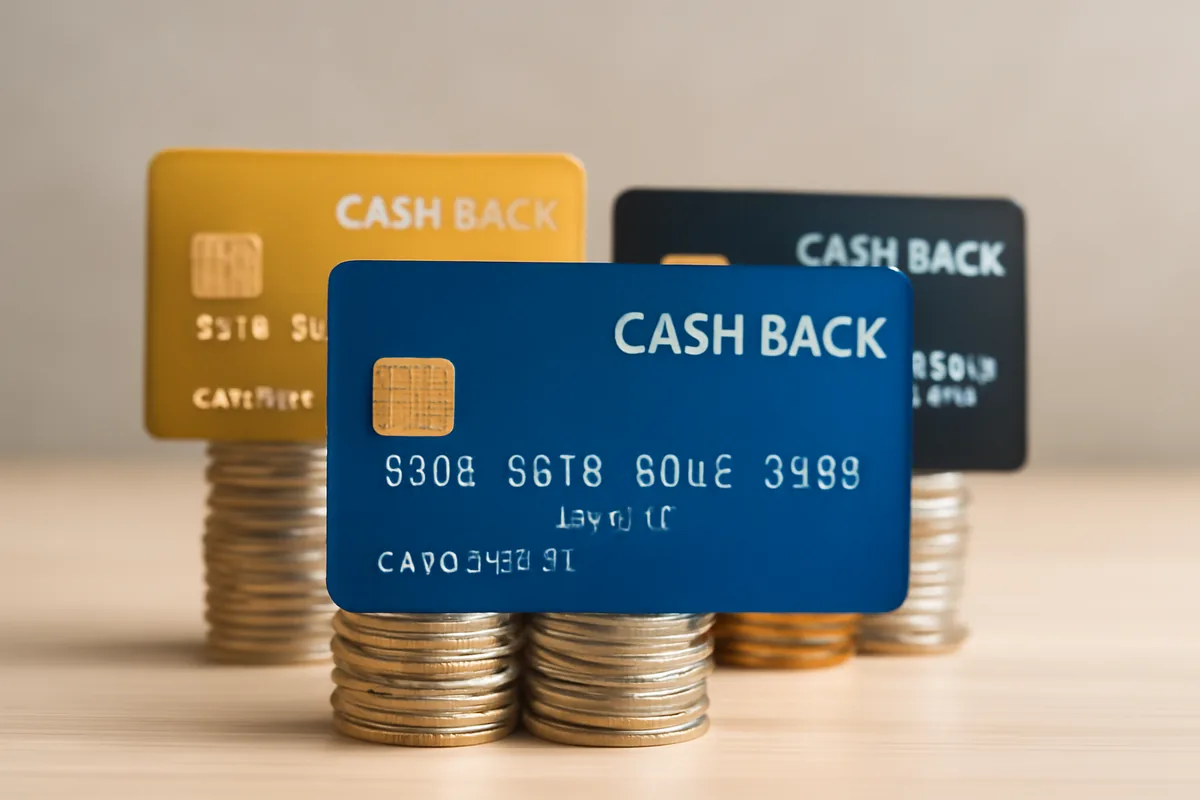
So, where does this “free money” from cashback cards actually come from? It’s not a bank charity. Every time you swipe a credit card, the merchant (the grocery store, gas station, or online shop) pays a small percentage of your transaction to the card network (like Visa or Mastercard) and the issuing bank. This is called an interchange fee. A portion of that fee is then passed back to you as a reward. When you use a debit card, that fee is significantly lower, leaving no room for meaningful rewards for the consumer.
The entire retail ecosystem is built on these fees. Prices are set with the assumption that many customers will pay with credit. By using a debit card, you are still paying the same shelf price as the credit card user, but you’re forfeiting the reward that is priced into the system. You’re subsidizing everyone else’s cashback and airline miles.
This isn’t a niche concept; it’s a mainstream financial tool. The popularity of rewards programs has soared over the past decade, with cash back consistently ranking as the most valued credit card feature among U.S. consumers. The fear of debt is valid, but it shouldn’t paralyze you. The solution isn’t to avoid credit cards entirely—it’s to use them responsibly. This means treating your credit card like a debit card: only charge what you can afford to pay off in full each month. By doing this, you avoid interest charges completely and the rewards become pure profit.
As the Consumer Financial Protection Bureau (CFPB) notes in its market reports, competition among issuers for new customers is intense, leading to increasingly generous and accessible rewards structures. For a beginner, this is fantastic news. The barrier to entry for earning valuable rewards has never been lower.
Phase One: The First Swipe and Early Mistakes
Sarah Chen graduated from college in spring 2025 with a communications degree and zero credit history. Like millions of young Americans entering the workforce, she faced a frustrating paradox: you need credit to build credit, but nobody wants to extend credit to someone without it. Her first apartment application was denied because her credit file was essentially invisible to the bureaus.
Photo by Pixabay on Pexels
She applied for three premium rewards cards in one week—a rookie mistake that would haunt her credit report for two years. Each hard inquiry dinged her nonexistent score, and all three applications came back declined. The rejections stung, but they taught her something crucial: beginners need beginner-friendly products.
The decision: Sarah chose the Discover it® Cash Back card after researching cards specifically designed for thin credit files. The card required no annual fee, offered rotating 5% categories, and—most importantly—had a reputation for approving first-time applicants. She also appreciated that Discover would match all the cash back she earned in her first year.
The result: Approved with a $1,500 credit limit. In her first year of responsible use, she earned $340 in cash back, which Discover doubled to $680. Her credit score climbed from nothing to 712 within fourteen months.
Phase Two: The Spending Audit That Changed Everything
By mid-2025, Sarah had been using her Discover card for six months. The novelty had worn off, and she suspected she was leaving money on the table. One Saturday afternoon, she exported her transaction history into a spreadsheet and categorized every purchase from the previous quarter.
The numbers told an uncomfortable story. She spent $847 monthly on groceries and dining combined, but the Discover card’s rotating categories only covered groceries for one quarter per year. The remaining nine months, she earned just 1% on her largest spending category. Meanwhile, her $180 monthly gas spending perfectly aligned with the Q2 rotating category—but she’d missed the activation deadline twice.
This audit revealed what many beginners eventually discover: a single card rarely optimizes all spending. The math demanded a second card, one with permanent grocery and dining bonuses.
The decision: She applied for the Blue Cash Everyday® Card from American Express, which offers 3% at U.S. supermarkets (up to $6,000 annually) and 3% at U.S. online retail purchases with no annual fee. Her improved credit score made approval straightforward. For deeper context, see our guide on Best Apps to Automate Your Savings in 2026 (Case Study + Gui.
The result: Her effective cash back rate jumped from 1.8% to 2.9% across all spending. Over the next twelve months, she earned $520 more than she would have with a single-card strategy.
Phase Three: The Annual Fee Question
As 2026 arrived, Sarah’s credit profile had matured considerably. Card issuers now sent her pre-approved offers for premium products—the same cards that had rejected her eighteen months earlier. The Blue Cash Preferred® Card caught her attention: 6% on groceries, but with a $95 annual fee attached.
She ran the calculation. At $850 monthly grocery spending, she’d earn $612 annually at 6% versus $306 at 3%—a $306 difference. Subtract the $95 fee, and she’d still net $211 more per year. The math worked, but something gave her pause. Annual fees create psychological friction; you feel obligated to use the card even when circumstances change.
The decision: Sarah kept her no-fee setup for now. She reasoned that beginners benefit more from flexibility than optimization. Her spending patterns might shift with a job change or relocation, and she didn’t want to feel locked into a card just to justify its fee.
The result: This conservative choice proved wise when she relocated for work three months later. Her new neighborhood had limited supermarket options, and her grocery spending dropped 40%. Had she committed to the premium card, she’d have barely broken even on the annual fee.
The Outcome: How the Rewards Stack Up
To understand the real-world difference between cashback card types, we tracked hypothetical earnings over one year for a beginner with a monthly budget of $2,000. This individual’s spending is broken down into common categories: $500 on groceries, $300 on dining, $200 on gas, and $1,000 on other miscellaneous purchases. We compared three leading no-annual-fee card archetypes available in 2026: a simple flat-rate card, a customizable category card, and a rotating category card.
The results clearly show that the best card is not universal; it’s deeply personal and depends entirely on spending habits and willingness to manage the account.
| Card Type (Hypothetical) | Reward Structure | Annual Cash Back from Spending | Year 1 Total (with $200 Bonus) |
|---|---|---|---|
| FlatRate Rewards Card | 2% cash back on all purchases. | $480 | $680 |
| CustomChoice Card | 3% on dining (chosen category), 2% on groceries, 1% on everything else. Capped at $2,500/quarter for 3%/2% categories. | $528 | $728 |
| RotatingCategory Card | 5% on rotating categories (e.g., Groceries Q1, Gas Q2), 1% on everything else. Capped at $1,500/quarter for 5% categories. | $495 | $695 |
*Note: Calculations assume the user maximizes category spending where applicable. The RotatingCategory card total is an average, as actual earnings would depend on the specific categories offered throughout 2026.
Key Lessons for Aspiring Cardholders
The data reveals several core truths about choosing your first cashback card. Understanding these principles is more important than chasing a specific percentage point.

1. Simplicity Has Value
The FlatRate Rewards Card is the most straightforward option. Its $480 annual return requires zero effort beyond using the card. For beginners who want to “set it and forget it,” this is a powerful choice. You never have to activate categories or wonder if a purchase qualifies for a bonus. This baseline simplicity provides consistent, predictable value, making it an excellent starting point.
2. Your Spending Dictates the Winner
The CustomChoice Card won in our scenario because the user’s budget aligned perfectly with its structure. High spending on dining (3%) and groceries (2%) pushed its earnings higher than the others. If that same user spent more on travel or home improvement, a different card would have been superior. The lesson is clear: your personal spending data is the ultimate guide to selecting the right card.
3. Welcome Bonuses Boost, But Don’t Blind
All three cards offered a typical 2026 welcome bonus of $200. This significantly inflates first-year earnings, as seen in the table. While attractive, it’s a one-time event. When choosing a card to keep for years, prioritize its long-term earning rate on your typical spending over a sign-up bonus. The bonus is the icing, not the cake.
4. Avoid Annual Fees at the Start
For a beginner, the primary goals are building a positive credit history and learning responsible habits without incurring costs. All the top beginner cards of 2025-2026 rightfully come with no annual fee. This ensures that your rewards are pure profit and you’re not pressured to spend more just to offset a fee.
How to Apply These Lessons to Your Situation
Choosing your card doesn’t have to be complex. Follow this three-step process to move from analysis to application with confidence.
Step 1: Conduct a Spending Audit
Before you even look at card applications, look at your own finances. Open your bank and debit card statements from the last three to six months. Tally your spending into major categories: groceries, restaurants/dining, gas/transit, online shopping, travel, and recurring bills. This simple exercise will replace guesswork with hard data, immediately revealing where your money goes and which bonus categories would benefit you most.
Step 2: Match Your Profile to a Card Type
- If your spending is spread evenly and you value simplicity: A flat-rate card offering 2% or more on every purchase is your best fit. It guarantees solid returns with no mental effort.
- If your spending is concentrated in one or two areas: A customizable card is likely your top earner. Choose one that lets you select your highest-spend category to earn 3% or even 5% back.
- If you enjoy optimizing and don’t mind tracking details: A rotating category card can be highly rewarding. You’ll need to remember to activate new categories each quarter, but the 5% return is often worth the small effort.
Step 3: Verify Your Credit Standing
Most premier cashback cards require a FICO score in the “good” to “excellent” range (generally 670 and above). Before applying, use a free service from your bank or a site like Credit Karma to check your score. Applying for cards you are unlikely to be approved for will only result in unhelpful hard inquiries on your credit report. If your score isn’t quite there, consider a student card or a secured card to build your history first.
Conclusion
The best cashback card for a beginner isn’t about a single “best” product, but about finding the right fit for your financial life. By analyzing your unique spending habits, prioritizing a no-annual-fee card, and committing to paying your balance in full each month, you can transform everyday expenses into a rewarding and credit-building experience. Start with data, choose with confidence, and manage your account responsibly to reap the long-term benefits.